

Do you know what medical geology is?
Do you know what medical geology is? Through these 10 videos they tell us about several examples of how geology influences human health.
Do you know what medical geology is? Through these 10 videos they tell us about several examples of how geology influences human health.
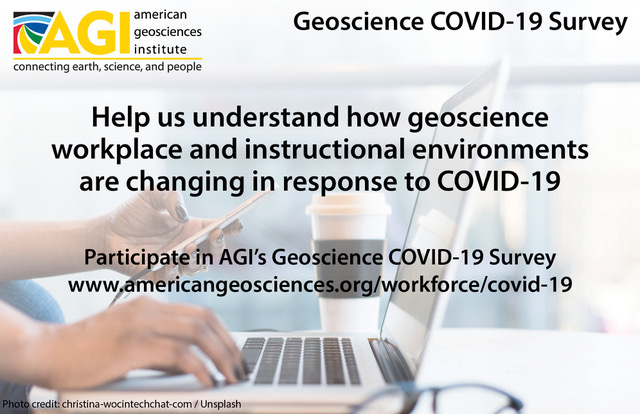
The American Geosciences Institute is conducting a year-long study to understand how geoscience employers and educational institutions are changing their workplace and instructional environments in response to the COVID-19 pandemic, and to discover which of these changes will become permanent.
This study is open to all geoscientists, including geoscience students, retired, and not currently employed, who reside in the United States, and are at least 18 years old.
Over the next 52 weeks, survey participants will be emailed a brief online status survey twice a month, which will only take a few minutes to complete.
The results of this study will be valuable in helping geoscience academic institutions, geoscience employers and decision makers to understand the structural impacts on the geoscience enterprise from the COVID-19 pandemic.
Results from the study will be reported only in aggregate and in a manner that ensures the confidentiality of the responses. Participation is voluntary, and participants may discontinue their participation at any time.
For more information and to participate in the study, please visit https://www.americangeosciences.org/workforce/covid19
If you have any questions about this study, please contact Leila Gonzales at lmg@americangeosciences.org
Funding for this project is provided by the National Science Foundation (Award #2029570). The results and interpretation of the survey are the views of the American Geosciences Institute and not those of the National Science Foundation.

Report on IMGA symposium on UDS Campus-Web
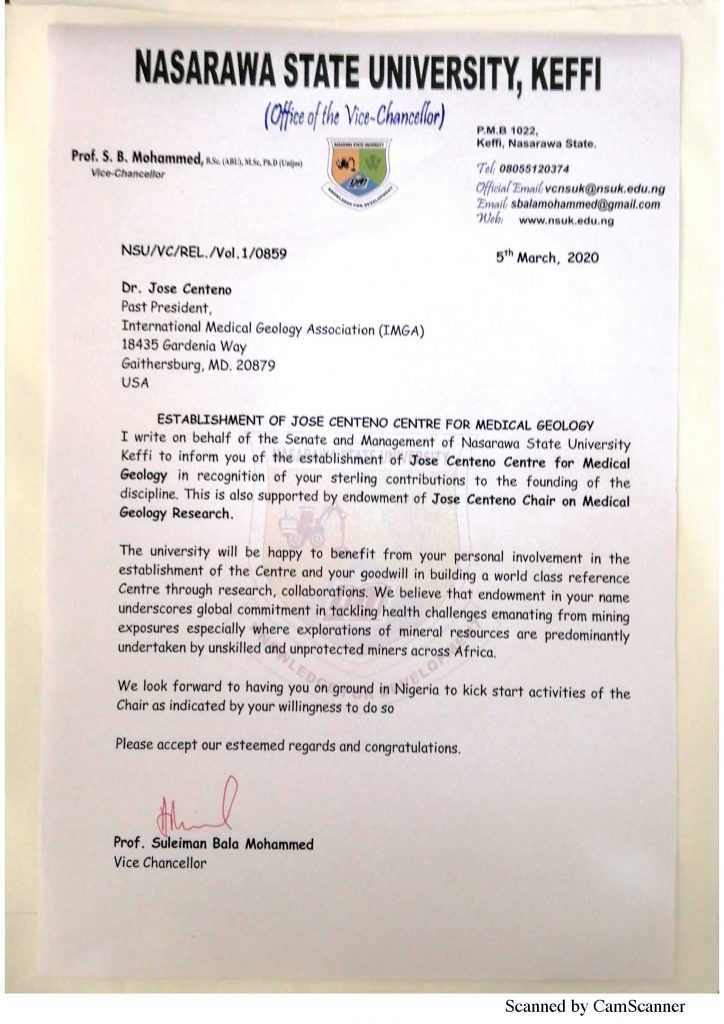
IMGA is pleased to announced the recent establishment of the “Jose Centeno Centre for Medical Geology Research” at Nasarawa State University, in Keffi (NSUK), Nigeria. This will be a pioneering Centre that focuses on medical geology development in Nigeria and Africa. NSUK has created an endowment for this Centre, which underscores a commitment in tackling health challenges emanating from a wide range of natural geological factors, as well as environmental and/or occupational risk factors such as mining exposures. NSUK has pioneered research in this area under the mentorship of founding father of medical geology and past president of the International Medical Geology Association (IMGA) – Prof. Dr. Jose Centeno. Being the first in the world, the expectations is that the Centre will lead in the development of research programs on medical geology in Nigeria and throughout Africa, developing capacity building in this multidisciplinary area of medical geology, collaborate with research grants sponsoring organizations, and establish international collaborators with national and international researchers in the emerging field of Medical Geology.
African-geoscience-institutions
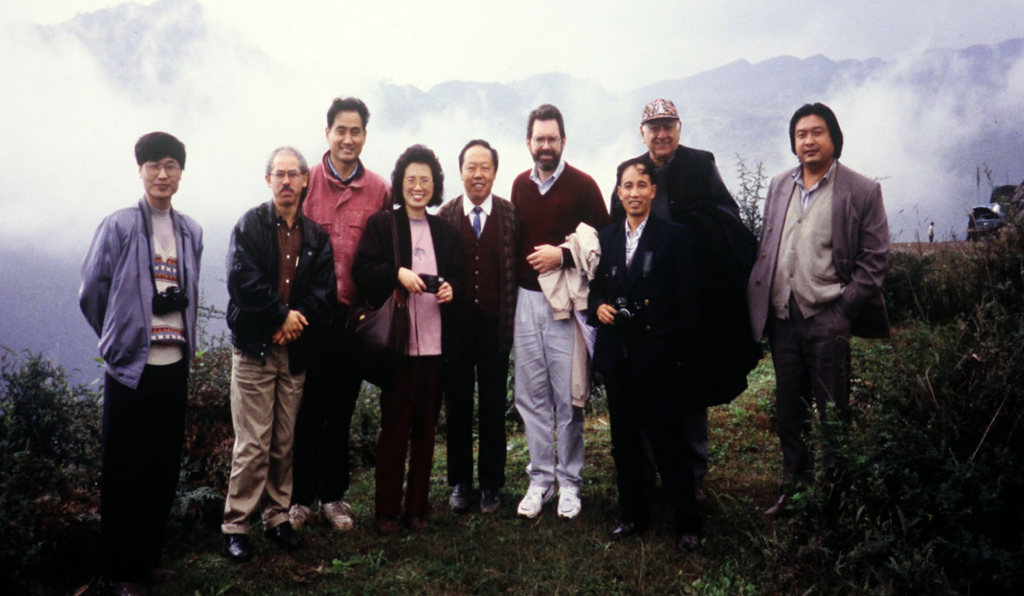
Guizhou Province, China – the birthplace of modern Medical Geology
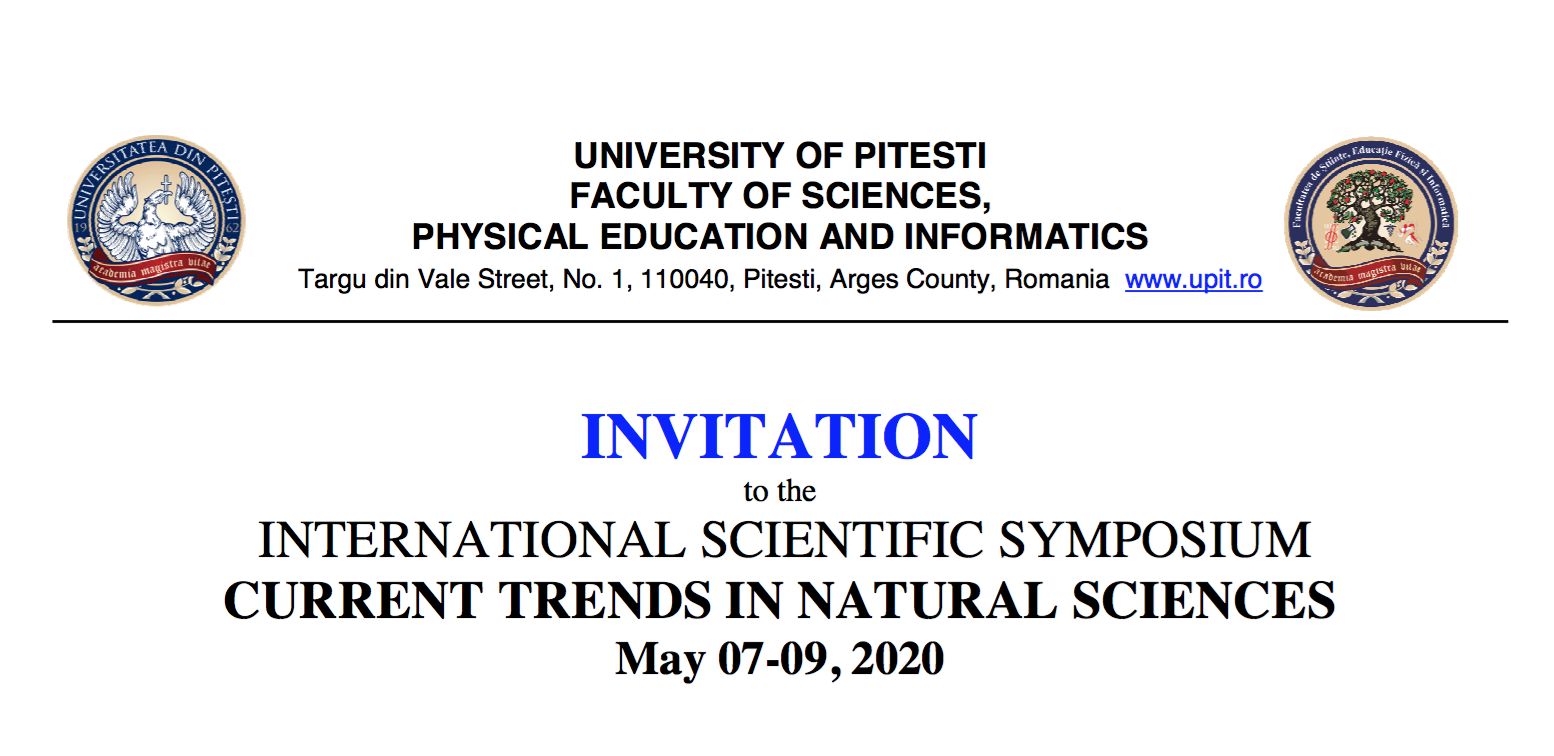
You are cordially invited to participate in the 13th edition of the International Scientific Symposium ”Current Trends in Natural Science”, which will be held in Pitesti, Romania, on May 07-09, 2020. This symposium will be organized by the Faculty of Sciences, Physical Education and Informatics from University of Pitesti.
Symposium Venue: Ramada **** Hotel, Pitesti.
Address: 31 Calea Bucuresti Street, Pitesti, Arges, Romania.
Website: https://ramadapitesti.ro/en/
Please find enclosed the invitation, registration form and related files. Deadline: Abstract and Registration Form submission – 01 May 2020. For more information please visit the website: https://www.natsci.upit.ro/international-symposium/
Communication language: English and Romanian.
Publication: The papers presented in symposium could be submitted to the journal Current Trends in Natural Sciences (journal indexed in international databases) (http://natsci.upit.ro/online-manuscript-submission/ ). For the issue of July, the full papers will be submitted until 1 June 2020, and for the issue of December, until 1 October 2020. The articles should be written according to the Author Guidelines – http://natsci.upit.ro/author-guidelines/.
The submitted papers will be reviewed by the members of the Scientific Committee and the final decisions will be forwarded to authors by e-mail. CTNS Journal is indexed/abstracted in: Google Scholar, SCIPIO, Index Copernicus, CAB ABSTRACT, Global Health Database, Horticultural Science Abstracts Database, Environmental Science Database, DOAJ (Directory of Open Access Journals), etc.
Registration fee: 230 RON (EUR 60, foreign participants). Deadline for payment: 01 May 2020.
For further information: you can contact us at this email address (symposium_CTNS_upit@yahoo.com) or phone 004 0723 273 786 (Assoc. Prof. Dr. Cristian Popescu).
We share with you this web page of International Union of Geological Sciences

“Estimation of Carbon Footprint Equivalent of Soil Nitrogen Loss Due to the Sugar Beet Harvest in Turkey: A Review” at Successful Transformation toward Land Degradation Neutrality: Future Perspective” 17-19 June 2019, Ankara, ATO Congresium. Marking the 25th anniversary of the UN Convention to Combat Desertification (UNCCD)
Higlihts of the study:
1-Average soil lost due to the sugar beet harvest is about 3.41 Mg ha-1 y-1,
2-Total amount of soil nitrogen loss≈2151 Mg y-1,
3-Production of nitrogenous fertilizer requires high energy consumption, emitting large amounts of CO2 (carbon footprint equivalent) to atmosphere. The carbon footprint of the world average N- fertilizer production given as of 5.66 Mg CO2 eqv./Mg Nitrogen. Hence, the annual carbon footprint equivalent is calculated as 12045 Mg CO2 eqv. /Mg Nitrogen fertilizer manufactured.
4- The fertilizer production to replace the nitrogen lost releases about 12045 Mg CO2 eq. /Mg Nitrogen fertilizer. Although this figure seems low, nitrogent losses and GHG emissions warrant consideration of soil management practices to reduce soil lost due to root crop harvests.
Enclosed:
1- Deadly flush floods in Turkey and Southern Europe
2- Global Atmosferic CO2 increase, Climate Change and Food Security
3- Climate Change, Land Degradation and Migration: Challenges for the EU and Africa,
Also “Estimation of Carbon Footprint Equivalent of Soil Nitrogen Loss Due to the Sugar Beet Harvest in Turkey: A Review”